Monday, February 1, 2016

A Different T.S. Eliot


Font Size: A A A

A Different T.S. Eliot

Young Eliot: From St. Louis to The Waste Land

by Robert Crawford
Farrar, Straus and Giroux, 493 pp., $35.00

The Poems of T.S. Eliot, Volume I: Collected and Uncollected Poems

edited by Christopher Ricks and Jim McCue
Johns Hopkins University Press, 1,311 pp., $44.95

The Poems of T.S. Eliot, Volume II: Practical Cats and Further Verses

edited by Christopher Ricks and Jim McCue
Johns Hopkins University Press, 667 pp., $39.95
Cecil Beaton Studio Archive/Sotheby's T. S. Eliot, 1956; photograph by Cecil Beaton from Mark Holborn's book Beaton: Photographs, just published by Abrams with an introduction by Annie Leibovitz

1.

For much of the twentieth century, T.S. Eliot's pronouncements on literature and culture had the force of a royal command. "In the seventeenth century," he wrote, "a dissociation of sensibility set in, from which we have never recovered." Probably no such separation of thought from feeling ever occurred, but sober historians analyzed it as if were as real as the Industrial Revolution. "Poetry is not a turning loose of emotion," Eliot wrote, "but an escape from emotion; it is not the expression of personality, but an escape from personality." Two generations of critics worked to do his bidding by banishing from the canon poets like Shelley whom Eliot had judged insufficiently impersonal.

Eliot's prose borrowed its sober and severe authority from the intensity and power of his poetry. His long poems The Waste Land (1922) and Four Quartets (1943), like many of his shorter ones, evoked a synthesizing vision of public and private disorder: the emotional and erotic failures of individual persons and the chaotic anomie of contemporary Europe, individuals and societies both thirsty for life-giving waters, both waiting for the transforming commandments that, in The Waste Land, "the thunder said." No other modern writer had his power to portray, simultaneously and in sharp focus, the disasters of both the inner world and the outer one.

When Eliot died in 1965 much of his authority died with him. Academic and journalistic opinion agreed that he had hoped public disorder could be resolved by imposing the kind of order favored by authoritarians; that, as a WASP from an old New England family, he felt superior to Jews and other outsiders to the high culture he embodied; that he held repugnant attitudes about women and sex. His detractors wrote entire books setting out the evidence against him, while his defenders replied with books that denied the evidence or explained it away.

Robert Crawford's Young Eliot, the first volume of a two-part biography, and The Poems of T.S. Eliot, edited and massively annotated by Christopher Ricks and Jim McCue, make it possible to see more deeply than before into Eliot's inner life, to perceive its order and complexity in new ways, and to recognize that his detractors and his defenders were responding to attitudes that Eliot condemned in himself and to beliefs that his poems simultaneously expressed and rebuked.

2.

The first sixteen years of Eliot's life, from his birth in St. Louis in 1888 until the year he attended Milton Academy near Boston before entering Harvard, are almost entirely undocumented. All that survive are two letters and a few numbers of a handwritten family magazine he began when he was eleven. More convincingly than earlier biographies,Young Eliot fills in the blanks by identifying books and events from Eliot's childhood that he later transformed into poetry. The disastrous St. Louis cyclone of 1896, for example, gave him the apocalyptic imagery heralding The Waste Land's "damp gust/Bringing rain."

Other phrases in the poem had roots in Eliot's prep school reading: James Russell Lowell's "the river's shroud" became Eliot's "the river's tent." Eliot got his adult reputation for vast learning from the dazzling variety of quotations in The Waste Land. Crawford notes that many of these were remembered from one of his required school texts, Francis Palgrave's anthology The Golden Treasury.

A voice in The Waste Land greets someone on a London street as "Stetson," as if identifying him with his hat. Crawford reports that Eliot's mother belonged to a ladies' club addressed by a Mrs. Stetson. Eliot printed a poem under the pseudonym Gus Krutzsch, a name that also appears in an early draft of The Waste Land; one of Eliot's St. Louis schoolmates was named August R. Krutzsch.

Crawford explores Eliot's ambivalence toward his distinguished Anglo-American family, which had also produced President Charles William Eliot of Harvard, who later kept urging him to take an academic post there. Eliot took pride in his manners and class, but felt alienated from his parents' earnest nineteenth-century piety. He was nostalgic about his English origins; the "dissociation of sensibility," some readers observed, coincided with the Eliots' ancestors' voluntary uprooting from England to America. But he also felt a lifelong nostalgie de la boue, starting with stories he wrote about hobos in his family magazine, later in his half-appalled fascination with the violent world of Boston Irish boxers and barkeeps in his "Sweeney" poems and the tough-guy milieu of his unfinished play Sweeney Agonistes.

Crawford reports that Eliot was a graceful dancer and expert sailor but was self-conscious about his protuberant ears and a congenital hernia that required him to wear a truss. He asked himself in Ash-Wednesday (1930), "Why should the agèd eagle stretch its wings?" (He was around forty at the time.) The children of a friend had "nicknamed him 'The Eagle' because of the size of his nose." His poetry tended to portray the human body as separate parts, not as a whole. From "Preludes": "all the hands"; "yellow soles of feet"; "short square fingers"; "eyes/Assured of certain certainties." From "The Love Song of J. Alfred Prufrock": "The eyes that fix you in a formulated phrase"; "Arms that are braceleted and white and bare." From The Waste Land: "Exploring hands encounter no defence"; "My feet are at Moorgate, and my heart/Under my feet." Even his image of primitive unconsciousness in "Prufrock"—"I should have been a pair of ragged claws/Scuttling across the floors of silent seas"—was an evocation of body parts, not something whole like W.B. Yeats's chestnut tree that will not divide into "the leaf, the blossom or the bole." And in The Waste Land his image of wished-for erotic satisfaction was another collage of body parts: "your heart would have responded/Gaily, when invited, beating obedient/To controlling hands."

The young Eliot concealed his physical anxieties with the obscene heartiness of his comic (or would-be comic) verses about King Bolo and his queen, which he sent first to laddish college friends, later to connoisseurs of scatological bawdry like Ezra Pound. Crawford writes reverently of Eliot's poetry and critical prose; but he adds critical distancing comments whenever he detects "a hint of misogyny or homophobia," as if to reassure censorious readers that he shares their sense of the moral urgency of scolding dead people.

At Harvard Eliot loafed through his first year, was placed on academic probation, and only became serious about his classes when he began studying ancient and modern philosophy and languages. Shortly before he graduated, he wrote a two-stanza poem, "Silence," which he never published, about an experience "for which we waited," one that overwhelms his consciousness of everything else. The second stanza reads:

This is the ultimate hour
When life is justified.
The seas of experience
That were so broad and deep,
So immediate and steep,
Are suddenly still.
You may say what you will,
At such peace I am terrified.
There is nothing else beside.

Crawford suggests that this was prompted by Eliot's recent hospitalization for scarlet fever, and describes it merely as a poem that "registers emotional disturbance" about something "fearful." But the poem describes a moment of religious awe, a terrifying vision of the peace that passeth understanding. Eliot recalled it in the moments of visionary intensity in The Waste Land and Four Quartets:

       my eyes failed, I was neither
Living nor dead, and I knew nothing,
Looking into the heart of light, the silence.
And the lotos rose, quietly, quietly,
The surface glittered out of heart of light.

W.H. Auden, drawing inferences from the poetry, told friends that Eliot had mystical visions of which he never spoke. (W.B. Yeats never had one, Auden added, but talked about them all the time.) Between 1911 and 1914, when Eliot was a graduate student in philosophy at Harvard, reading Buddhist and Hindu scriptures, he focused increasingly on religions more visionary and demanding than his parents' Unitarianism, more committed to a reality that was otherworldly and absolute.

Crawford records with subtle sympathy Eliot's failed love for his Boston contemporary Emily Hale, "intelligent, vulnerable, strictly brought up and defensively 'proper.'" Eliot was devastated when he made his feelings clear and she gave him no possibility of hope—although in fact she was secretly in love with him, and remained so all her life. Eliot seems to have addressed her, also secretly, in lines in The Waste Land that recalled his inner surrender to her: "My friend, blood shaking my heart/The awful daring of a moment's surrender…" The notes in the new Poems of T.S. Eliotrecord Eliot's correction of a French translation from "Mon ami" to "Mon amie," triple-underlining the feminizing "e."

Eliot left America for England in 1914, and ignored pleas for his return sent by his family and the Harvard philosophy department. In 1915, in a state of erotic despair, and apparently still a virgin, he impulsively married the flirtatious, neurotic Vivien Haigh-Wood, and descended into a miserably entangling marriage, "sexually awkward" (as Crawford reports) for both, constantly shaken by medical and psychological crises. Eliot seems to have suffered from recurring impotence; Vivien had an affair with Bertrand Russell. The crises culminated in Eliot's mental breakdown in 1921—"entering the whirlpool," in The Waste Land's phrase—followed by a tentative, half-achieved sense of renewal and recovery. He asked near the end of The Waste Land, "Shall I at least set my lands in order?" Eliot spent the next few decades—in Four Quartets and his books The Idea of a Christian Society (1939) and Notes Towards the Definition of Culture (1948)—trying to imagine what that order might be like.

3.

Shortly after the Munich Agreement of September 1938, when Britain and France capitulated to Hitler's territorial demands in Central Europe, Eliot wrote in The Idea of a Christian Society:

I believe that there must be many persons who, like myself, were deeply shaken by the events of September 1938, in a way from which one does not recover; persons to whom that month brought a profounder realization of a general plight…. The feeling which was new and unexpected was a feeling of humiliation, which seemed to demand an act of personal contrition, of humility, repentance and amendment; what had happened was something in which one was deeply implicated and responsible.

He was repenting personally for the civilization that had given him his early advantages and in which he had now become a literary eminence:

It was not…a criticism of the government, but a doubt of the validity of a civilization. We could not match conviction with conviction, we had no ideas with which we could either meet or oppose the ideas opposed to us. Was our society, which had always been so assured of its superiority and rectitude, so confident of its unexamined premises, assembled round anything more permanent than a congeries of banks, insurance companies and industries, and had it any beliefs more essential than a belief in compound interest and the maintenance of dividends?

This is not the language of a fascist sympathizer. Eliot was mistaken for one because he publicly doubted the value of democracy, but his doubts were focused on its inability to give a moral and intellectual answer to the force-worship of the dictators:

The term "democracy," as I have said again and again, does not contain enough positive content to stand alone against the forces that you [readers] dislike—it can easily be transformed by them. If you will not have God (and He is a jealous God) you should pay your respects to Hitler or Stalin.

In the world of practical politics, a choice between God and the dictators seems impossibly stark, but Eliot, as always in his political writings, was thinking of the opposed societies of blessed and damned souls in Dante's Commedia, who made an equally stark choice between an ascent through Purgatory to Paradise and a descent into the prison-state of Hell.

Whatever flaws he found in democracy, Eliot never imagined that any traditional, hierarchical political system knew any better how to "have God." "To identify any particular form of government with Christianity," he wrote, "is a dangerous error: for it confounds the permanent with the transitory, the absolute with the contingent." Some years earlier, Eliot told Bertrand Russell that he wanted to write about "Authority and Reverence," about some form of religious authority that did not rely on discredited political systems: "There is something beneath Authority in its historical forms which needs to be asserted clearly without reasserting…forms of political and religious organization which have become impossible." He wrote in an essay: "The ideas of authority, of hierarchy, of discipline and order, applied inappropriately in the temporal sphere, may lead us into some error of absolutism or impossible theocracy."

Eliot's detractors cite his praise for Charles Maurras, whose Action Française movement was monarchist, nationalist, and thuggishly anti-Semitic. Crawford quotes Eliot addressing Maurras in a letter as "Cher Maître"; but two hundred pages later, he quotes Eliot warning English readers against Maurras's "intemperate and fanatical spirit" in his campaign to protect French culture against foreign influences.

Crawford makes no comment on this apparent contradiction, but the solution to it may be found in Eliot's syllabus for an adult education course he taught on modern French literature. Under Maurras's name and the name of his early ally Pierre Lasserre, the syllabus briefly characterizes their work: "Their reaction [to democracy] fundamentally sound, but marked by extreme violence and intolerance." Eliot made an absolute distinction between, on the one hand, the faults and frailties of democracy and, on the other, the "extreme violence" and "fanatical spirit" of every political movement that sought to overturn it. Eliot said almost nothing about the democratic traditions of equality and rights because he thought real equality was possible only in a society built on the conviction that every soul is equal before God, and individual rights could be fulfilled only in a society like Dante's Paradise where everyone can say, freely and gratefully, "In His will is our peace."

T. S. Eliot; drawing by David Levine

Eliot made careful use of his patrician manners to advance his career, but his poems kept insisting that his social superiority left him just as distant as anyone else from the remote Absolute that, after his conversion to Anglicanism in 1927, he called God. The section titled "A Game of a Chess" in The Waste Land portrays the emotionally sterile upper-class marriage of a scarcely disguised nervous Vivien and silent Eliot in an expensively decorated drawing room, followed by a monologue in a pub about the degraded marriage of a lower-class couple named Albert and Lil. The point is that the two marriages are equally sterile, that the social status and artistic refinement that Eliot tried to value in himself were futile defenses against his humiliating sense of spiritual failure.

In the same way, a poem that almost everyone reads as a statement of anti-Semitic disdain, "Burbank with a Baedeker: Bleistein with a Cigar," is Eliot's rebuke against his own pharisaical fantasy that an educated WASP is somehow closer to God than even the coarsest caricature that he could imagine of a Jew. Cigar-smoking Bleistein is a mere congeries of body parts and cultures: "A saggy bending of the knees/And elbows, with the palms turned out,/Chicago Semite Viennese." Yet the WASP Burbank—Eliot's self-portrait—has nothing better to claim for himself: he gets culture secondhand from a Baedeker guidebook (Eliot wrote careful notes in his own Baedekers); he is sexually impotent ("the God Hercules/Had left him") when seduced by the diseased Princess Volupine (Vivien in aristocratic disguise), with her "blue-nailed, phthisic hand"; and he is reduced to passive aesthetic nostalgia at "Time's ruins."

The degree to which a writer shares the prejudices of his family, his class, and his culture is less telling than the degree to which he is ashamed of them. Ezra Pound was defiantly unashamed of his prejudices. Eliot was more than ashamed: he was penitential. His poems are elliptical confessions of attitudes that he knew he must reject, although he also knew that, in Montaigne's words, "we cannot rid ourselves of that which we condemn." This may help to explain why he continued to reprint "Burbank" and "Gerontion"—another disguised self-portrait of someone spiritually sterile who imagines himself superior to "the Jew"—despite objections from readers and reviewers; he refused to withdraw what was in effect a penitential confession because other people disapproved of the faults he had confessed.

Around 1951, at a London reading with Eliot and many other poets in attendance, one of the writers on the program, Emanuel Litvinoff, recited a poem denouncing Eliot's anti-Semitism: "I am not one accepted in your parish/Bleistein is my relative." Other poets shouted in Eliot's defense. Meanwhile, an observer remembered, "Eliot leaned forward, his head in his hands, muttering over and over, 'It's a good poem, it's a good poem.'"

A rebarbative phrase about Jews in his 1934 book of lectures, After Strange Gods, later became notorious, and had nothing penitential about it. Eliot was imagining what a society committed to tradition might be like, and, as always in his social speculations, made no practical suggestions. "Serious difficulties" faced any effort to revive or establish a tradition: "It does not so much matter at present whether any measures put forward are practical, as whether the aim is a good aim, and the alternatives intolerable." His imaginary traditional society would be unified in the way that real societies are not, with "homogeneity of race and a fundamental equality." What is important, he said, "is unity of religious background; and reasons of race and religion combine to make any large number of free-thinking Jews undesirable."

Eliot wrote After Strange Gods for an American lecture series in May 1933, and later told Isaiah Berlin that he would never have printed the sentence about free-thinking Jews had he "been aware of what was going to happen, indeed had already begun, in Germany…. I still do not understand why the word 'race' occurs in the sentence, because my emphasis was on the adjective free-thinking." Again writing "theoretically" about an imaginary parallel universe shaped only by tradition and theology, he told Berlin:

Theoretically, the only proper consummation is that all Jews should become Catholic Christians [i.e., members of a universal church, not necessarily the Roman one]. The trouble is, that this ought to have happened long ago: partly because of the stiff neckedness of your people; and largely [Eliot's footnote: Perhaps chiefly! The apportionment is not immediately relevant] because of the misbehaviour of those who called themselves Christians, this did not happen.

When After Strange Gods appeared in 1934, Auden, whose politics were practical, not imaginary, wrote to Eliot: "Some of the general remarks…rather shocked me, because if they are put into practice, and it seems quite likely [they will be], would produce a world in which neither I nor you I think would like to live." As early as 1940, years before the book became the subject of public controversy, Eliot wrote to a friend that it was "largely drivel," written to avoid bankruptcy. He never allowed any of it to be reprinted.

Crawford quotes a letter written to Eliot by his mother, Charlotte Eliot: "It is very bad in me, but I have an instinctive antipathy to Jews, just as I have to certain animals." Crawford plausibly infers that "anti-Semitism was a prejudice substantially unspoken in the Eliots' St. Louis household, but indisputably present." Yet the simple statement of Charlotte's Unitarian conscience, "It is very bad," was the hidden theme of the poems in which Eliot simultaneously disdained Jews and confessed his own absolute spiritual failure.

In 1934, Eliot separated from Vivien; she had become increasingly unbalanced, and in 1938 was confined by her brother to an asylum where she died in 1947. (Despite rumors to the contrary, Eliot took no part in the commitment procedure.) After the separation, Eliot continued his normal working life as a director at the publishing firm of Faber & Faber while privately withdrawing into penitent asceticism. At 6:30 every morning he knelt on the stone floor of a local church. In the flat he shared with his bibliophile friend John Hayward, the brightly painted rooms at the front were Hayward's, while Eliot took the dark rooms at the back. His bedroom was lit with one bare bulb, and an ebony crucifix hung on the wall above his bed.

Eliot's sense of personal implication in the failures of his civilization seems to have arisen from the same deep source that gave him his unique double vision of personal and social disorder in The Waste Land. At the heart of his thought and feeling was an unspoken conviction that he, like the society in which he lived, had failed to become what he ought to be, something cohesive and whole, that with all his authority and fame, he lacked a unified personal self. In the same way that his civilization seemed "a congeries of banks, insurance companies and industries," he seemed to himself—as he said in the title of a poem about himself that he wrote in French—a "Mélange Adultère de Tout." His body was a set of disparate parts, his mind a disordered mixture of cultures, eras, classes, and languages, "fragments I have shored against my ruins." In Four Quartets the soul he meets in a modern version of Purgatory—described in Dantesque stanzas—is not a unique individual soul like everyone in Dante, but a figure "Both one and many" with "The eyes of a familiar compound ghost." He asked in "Gerontion," "After such knowledge, what forgiveness?" Without a self that could be forgiven, Eliot could not imagine forgiveness.

All the fragmentary selves—his own and others'—were in desperate need of the purgatorial fire that might anneal them each into something whole. Dante's last glimpse of Arnaut Daniel in Purgatory recurs in The Waste Land: "Poi s'ascose nel foco che gli affina" (Then he hid himself in the refining fire). Eliot wrote in After Strange Gods:

It is in fact in moments of moral and spiritual struggle depending upon spiritual sanctions…that men and women come nearest to being real. If you do away with this struggle, and maintain that by tolerance, benevolence, inoffensiveness and a redistribution or increase of purchasing power, combined with a devotion, on the part of an élite, to Art, the world will be as good as anyone could require, then you must expect human beings to become more and more vapourous.

4.

In "Tradition and the Individual Talent" Eliot wrote that "the more perfect the artist, the more completely separate in him will be the man who suffers and the mind which creates." He wrote in the same essay that a poet must have "a feeling that the whole of the literature of Europe from Homer and within it the whole of the literature of his own country has a simultaneous existence and composes a simultaneous order."

Robert Crawford's biography honors the Eliot who suffered by showing, contrary to his self-negating wish, how inseparable he was from the mind that created. Christopher Ricks and Jim McCue, in their astonishingly rich notes on Eliot's sources in English and French poetry and much else, honor the Eliot who, as they implicitly portray him, perceived the whole of European literature in a simultaneous order.

The Poems of T.S. Eliot prints all of Eliot's published and unpublished verse, including his obscene limericks and the rhymed addresses he wrote on postcards and envelopes, together with a thousand pages of densely printed commentary and four hundred pages of textual apparatus. The text and notes have been beautifully produced by Faber & Faber for the edition published in America by Johns Hopkins, but the edition is awkwardly divided into two volumes instead of taking its logical shape as three volumes, one each for the poems, the commentary, and the lists of textual variants.

An edition like this one, in which one page of verse exfoliates into as many as a dozen pages of commentary, evokes thoughts of extravagant editorial follies like the one parodied by Vladimir Nabokov in Pale Fire. In fact, Ricks and McCue are models of editorial discretion who let Eliot annotate himself. Their notes include, in addition to Eliot's sources, extensive quotations from his prose and verse. The editors annotate "a moment's surrender" in The Waste Land with, among other things, a sentence from "Tradition and the Individual Talent": "The progress of an artist is a continual self-sacrifice, a continual extinction of personality."

The new edition includes five previously unknown poems that Eliot wrote to his second wife, Valerie Fletcher, whom he married in 1957, when he was sixty-eight and she was thirty. She had been his secretary at Faber & Faber, and, in a near recurrence of his failed relation with Emily Hale, he seems to have been the last person in the firm to realize that she was in love with him. In Eliot's last play, The Elder Statesman (1959), old Lord Claverton finds in his daughter's love "the peace that ensues upon contrition." Her forgiveness has given him reality: "It's the real you I love," she says.

Eliot's poems to Valerie include one in praise of her breasts, celebrating their varying shapes when she stands or lies on her back or side; another in which his fingers move from her nipple to her navel and beyond; a limerick about "a nice girl named Valeria/Who has a delicious posterior"; and a poem about their lovemaking:

I love a tall girl. When we lie in bed
She on her back and I stretched upon her,
And our middle parts are busy with each other,
My toes play with her toes and my tongue with her tongue,
And all the parts are happy. Because she is a tall girl.

He and his wife are still, as he was in earlier years, congeries of body parts, but some of those parts, "busy with each other," have become the instruments of love.

© 1963-2016 NYREV, Inc. All rights reserved.

Evernote helps you remember everything and get organized effortlessly. Download Evernote.

Monday, January 4, 2016

Slavoj Žižek: Is something rotten in the state of Turkey?

Slavoj Žižek: Is something rotten in the state of Turkey?

A reply to my critics. 

My short comment on the "war on terror" published online by New Statesman has triggered a series of critical reactions which definitely looks like a well-coordinated campaign, so it deserves a short reply.

With regard to the statements quoted in my text and falsely attributed to Hakan Fidan, the head of Turkish intelligence, things are simple and clear. After friends informed me about these statements, I searched for them on the web and found a couple of sites with them, plus I did not find any sites denying them. So I quoted the statements, mentioning the website where I found them. After it was discovered that these statements are false, the paragraph containing them was immediately deleted. What more could I have done with my limited resources? Furthermore, I find totally out of place the attempts to locate this accident into a series which allegedly demonstrates my "passion for plagiarism and fabrication", and where I am accused even of plagiarising myself (in one of my columns for NYT, I used two passages from a book of mine).

But the main voice in the debate was that of Ibrahim Kalin, the spokesperson for the Turkish presidency, who published on the al Jazeera website a column on "Zizek, Turkey and intellectual frivolity" - a very strange text indeed. It attributes to me "the laughable claim that Turkey is somehow responsible for the Paris attacks" (which I never made), plus the claim that "Turkey buys oil from ISIL" (which I also never made) as well as the claim that "Turkey is fighting the Kurds fighting ISIL in Syria" (also never made by me).

My claims are much more modest and cautious, in accordance with the obvious limitation of my sources: I speak of the "benign neglect" towards ISIL, of "facilitating" oil commerce of ISIL, I mention Turkish attacks on Kurds in Turkey itself, not in Syria. I explicitly put the blame on all sides: Russia and the West, Turkey, Saudi Arabia and Iran. I am well aware that, in its bombing operations in Syria, Russia is following the pro-Assad agenda and also bombing non-ISIL opposition to Assad. My sources are numerous reports and comments in the Western (not Russian) press, as well as in the Turkish opposition press – I refer to David Graeber's comment in The Guardian.

In contrast to me, Kalin writes as an official spokesperson, giving us the official version of the situation. From following the news, the least I can say is that I find deeply problematic not only many of Kalin's particular claims, but also his overall stance. While he reproaches me for my silence about the PKK terror (a reproach that I find meaningless: of course I didn't mention it, as it was not the topic of my very short text), I find it politically and ethically deeply problematic how Kalin reduces the Kurdish resistance to terrorism, ignoring the blatant fact that the fate of the Kurds is an authetic tragedy of colonialism imposing artificial borders: divided among four countries – Iran, Iraq, Syria, Turkey – they are deprived of cultural and political autonomy.

Kalin writes: "The PKK is trying to conceal its terror crimes on the pretext of fighting ISIL. The fact is that Turkey does not bomb any Kurdish targets in Syria. It only goes after the PKK terrorists that put Turkish and Kurdish lives in danger." Some acts of PKK are definitely problematic, but to reduce PKK to a terrorist organisation and to ignore its roots in the actual situation of Kurds is a frivolous obscenity. My impression from reading numerous reports is: Turkey definitely "goes after the PKK terrorists" in an incomparably more brutal way than it goes after ISIL, without seriously addressing the justified Kurdish demands for cultural and political autonomy. Turkey endorsed the "war on terror" so that, under its banner, it was able engage in a new wave of brutal attacks on Kurds, not only on PKK (ignoring strong forces within PKK which are ready to renounce armed struggle) but also on Kurdish legitimate political organizations which are denounced as the public face of terror. The true question is how much of Kurdish armed struggle is simply a reaction to Turkish oppression.

This is why I find deeply problematic Kalin's claim: "If we are against terrorism, we must be against them all whether it is ISIL, al-Qaeda, Boko Haram, ETA or PKK terrorism." Yes, but we must also be against STATE terrorism which is most dangerous of them all. "The fact that PKK is a Marxist-Leninist terrorist organisation does not absolve it of its crimes." Yes, and the fact that Turkey is a state also does not absolve it of its crimes.

Kalin writes: "The fact that the vast majority of terrorist acts in Europe and the US are committed by home-grown terrorists should be a wake-up call for the failure of multiculturalism and social imagination in Western societies." I am a long-time critic of the predominant Western multiculturalism, but what, exactly, should replace it? Certainly not the way Turkey is dealing with its own other "cultures", especially Kurds – to paraphrase Kalin, PKK activity should be a wake-up call for Turkey, a clear signal of its failure to deal with Kurds, of the lack of "social imagination" in allowing Kurds to attain cultural and political autonomy.

It is also clear that the core of the problem does not reside in how Turkey relates to the Kurds. Turkey's inability to integrate Kurds as an autonomous ethnic group is part of a larger struggle that is going on in Turkey, a struggle for what Turkey is and will become. Continuous tensions between the Turkish state apparatus and intellectuals, journalists, etc - tensions which spectacularly exploded in Gezi Park protests in 2013 - are a clear sign that Turkey is in the middle of a struggle for its identity. There are good reasons to presume that if the political forces which oppose the Erdogan regime were to gain the upper hand, the struggle of Kurds would enter a new stage.

Incidents like the one with Can Dundar, the editor-in-chief of the opposition Cumhuriyetnewspaper, and Erdem Gul, the paper's Ankara bureau chief, are indicative of this predicament. After they described how Turkey's secret services had sent arms to Islamist rebels in Syria, Dundar and Gul were accused of spying and "divulging state secrets", and placed in pre-trial detention. Erdogan personally filed a criminal complaint against Dundar, demanding he serve multiple life sentences.

Such incidents bring us face to face with what goes on in today's Turkey: threat to the freedom of press, obscure links with Islamists, etc. An observer has to make a choice here: are all these accusations reported in hundreds of texts part of a gigantic plot – or is there effectively something rotten in the state of Turkey?
Evernote helps you remember everything and get organized effortlessly. Download Evernote.

Tuesday, December 29, 2015

How modern life distorts the way we speak English

How modern life distorts the way we speak English

When did all shop assistants start asking, "Are you all right there?" And can I blame Simon Cowell for the indiscriminate use of "passionate"?

The whirring ATM machine fails to produce the money I requested. Instead, the screen tells me, "SORRY, WE CAN'T GIVE YOU CASH RIGHT NOW."

What makes this message so terrifically annoying? There's so much to choose from. Is it the "right now", which wraps an admission of failure in a hip Americanism? Is it the airy vagueness? (If not "right now", might there be cash in a moment?) Is it the slightly reproving tone, as if the ATM machine were busy with much more important stuff than shovelling out tenners to me?

So many forms of words one encounters nowadays are subtly insulting and patronising in just that way. For instance, when you explain or describe something to someone, they are likely to answer, "Oh . . . OK." The "oh" expresses surprise and the "OK" signifies acquiescence despite the listener's better judgement. In other words: "You're obviously raving mad but I'll go along with it."

Whenever a new infuriating verbal tic comes along, I wonder who started it and how it reached so many people so quickly. Who was the first to say "I was like" rather than "I said", or "The thing is is . . .", or "ree-search" instead of "research", or "going forward" instead of "in the future"? How is it that suddenly anyone delivering any form of explanation begins with the word "so"? Who first thought of personalising impersonal moments by saying, "Bear with me" when routing your phone call, or "Just pop in your Pin for me" when you pay for something with a card?

When did all shop assistants start asking, "Are you all right there?" instead of "Can I help you?" and psephologists take to informing us incessantly at general elections that the result is "too close to call"? At what point did a briefing turn into "a heads-up" and people, rather than computers, start being "hard-wired" and having "default settings", as well as finding all kinds of intrusive extra ingredients in their DNA? ("Italy," I recently heard a TV chef declare, "is in my culinary DNA.")

Occasionally, such verbal eczema can be traced back to a definite source. The ubiquitous use of "guys", irrespective of gender, dates from the Friends TV show in the 1990s. "D'you know what?" as a conversational key change to candour and sincerity should be copyrighted to Simon Cowell. The indiscriminate use of "passionate" also must derive from Cowell's talent shows, as it is something every contestant must be. Now even Thames Water is "passionate" about water and sewerage.

Most annoying words and phrases don't even have the virtue of newness but, as T S Eliot said, are like old copper pennies, worn smooth with overuse. Sports commentators are the worst offenders, with an overheated vocabulary that calls every moderate-sized crowd "fantastic", every successful kick or shot "fabulous" and every mildly surprising result "incredible". The lexicon of sport is omnipresent, reflecting a nation that is serious about little else. Every significant person in any profession is "a player", every important decision "a game-changer" and everyone in need of improvement "needs to raise his [or her] game".

Politicians come next, though their need to hide behind words makes for a more varied metaphorical palette. How often have we heard a government minister declare that such and such a thing will never happen "on my watch", evoking a vision of some trusty skipper in oilskins, steering us safely through tempests? How often have ministries and agencies been called on to "step up to the plate", and MPs, caught out in lechery or dishonesty, pleaded hopefully that it's "time to draw a line under" their misbehaviour?

Today's news broadcasts consist almost entirely of clichés bolted together in blithe unconsciousness of the surreal mixed metaphors that can result: "After the bubble burst, a lifeboat operation was launched to shore up the system . . ." or, "Unless somebody's head is stuck on a pike, people will start to cry whitewash." These are genuine examples heard on the BBC, on which it's now more important for commentators to wave their hands around than use English with intelligence.

Broadcasters can at least plead the pressure and panic of live transmission. Not so print journalists, who with calm deliberation reach for ninth-hand coinages such as "a perfect storm", "fit for purpose" or "the usual suspects". The drama critic Kenneth Tynan wrote that he could never love anyone who didn't thrill to John Osborne's Look Back in Anger. I couldn't love anyone who began an article, like so many others, with Jane Austen's "It is a truth universally acknowledged . . ."

Evernote helps you remember everything and get organized effortlessly. Download Evernote.

The Novel’s Evil Tongue - The New York Times

The Novel's Evil Tongue

By CYNTHIA OZICKDEC. 16, 2015

Photo
Credit Hudson Christie

When the world was just new, Story came into being, and it came with the beguilements of gossip, and talebearing, and rumor.

Most pressingly, it came through truth-telling. After all, the garrulous serpent was no liar when he told Eve the secret of the Tree of the Knowledge of Good and Evil. Eat of it, he whispered, and "your eyes shall be opened, and ye shall be as God, knowing good and evil." Ever since Genesis, no story has been free of gossip, and how unreasonable it is that gossip has its mischief-making reputation. Had Eve not listened, had she been steadfast in the face of so unverifiable a proposition, what barrenness! Eden would still be what it was, a serene and tedious nullity, a place where nothing happens: two naked beings yawning in their idleness, innocent of what mutual nakedness might bring forth. No Cain and Abel, then no crime novels and Hitchcock thrillers. No Promised Land, then no Young Men From the Provinces setting out on aspiring journeys. No Joseph in Egypt, then no fraught chronicles of travail and redemption. In the absence of secrets revealed — in the absence also of rumor and repute and misunderstanding and misdirection — no Chaucer, no Boccaccio, no Boswell, no Jane Austen, no Maupassant, no Proust, no Henry James! The instant Eve took in that awakening morsel of serpentine gossip, Literature in all its variegated forms was born.

Scripture too teems with stories, including tales of envy, murder, adultery, idolatry, betrayal, lust, deceit. Yet its laws of conscience relentlessly deplore gossip, the very engine that engenders these narratives of flawed mortals. Everything essential to storytelling is explicitly forbidden: Keep your tongue from speaking evil, no bearing false witness, no going up and down as a talebearer among your people. The wily tongue itself is a culprit deserving imprisonment: There it is, caged by the teeth, confined by the lips, squirming like a serpent in its struggle to break free. Harmful speech has been compared in its moral injury to bloodshed, worship of false gods, incest and adultery; but what novelist can do without some version of these fundamentals of plot?

Gossip is the steady deliverer of secrets, the necessary divulger of who thinks this and who does that, the carrier of speculation and suspicion. The gossiper is often a grand imaginer and, like the novelist, an enemy of the anthill. The communitarian ants rush about with full deliberation, pursuing their tasks with admirable responsibility, efficiency, precision. Everything in their well-structured polity is open and predictable — every gesture, every pathway. They may perish by the hundreds (step on an anthill and precipitate a Vesuvius); the survivors continue as prescribed and do not mourn. And what a creaturely doom it is, not to know sorrow, or regret, or the meaning of death; to have no memory, or wonder, or inquisitiveness, never to go up and down as a talebearer, never to envy, never to be seduced, never to be mistaken or guilty or ashamed. To be destined to live without gossip is to forfeit the perilous cost of being born human — gossip at its root is nothing less than metaphysical, Promethean, hubristic. Or, to frame it otherwise: To choose to live without gossip is to scorn storytelling. And to scorn storytelling is to join the anthill, where there are no secrets to pry open.

Photo
Credit Hudson Christie

Why is it needful to penetrate the labyrinth of hidden things, to go up and down among your people as a detective spilling hypotheses? Not unlike the philosophers, the gossiper strives to fathom the difference between appearance and reality, and to expose the gap between the false and the genuine. Even something so private as rumination is a mode of gossip, whereby the newsmonger is on the lookout for motive and character: every prober her own Proust. And since gossip peers through the keyhole of unsuspecting humanity, how can Emma Woodhouse not be compelled to reflect on Mrs. Elton, the young vicar's newly arrived bride?

"She did not really like her. She would not be in a hurry to find fault, but she suspected that there was no elegance; ease, but not elegance. She was almost sure that for a young woman, a stranger, a bride, there was too much ease. Her person was rather good; her face not unpretty; but neither feature, nor air, nor voice, nor manner were elegant. Emma thought at least it would turn out so. . . . She had a quarter of an hour of the lady's conversation to herself, and could composedly attend to her; and the quarter of an hour quite convinced her that Mrs. Elton was a vain woman, extremely well satisfied with herself, and thinking much of her own importance; that she meant to shine and be very superior, but with manners which had been formed in a bad school, pert and familiar; that all her notions were drawn from one set of people, and one style of living; that if not foolish she was ignorant, and that her society would certainly do Mr. Elton no good."

We too do not like Mrs. Elton, nor are we intended to like her; but oh, what nasty pleasure we take in making her acquaintance! And must Jane Austen be admonished, by the strictures of biblical fiat, to keep her tongue from speaking acidly? Interior gossip of this kind, not yet spoken aloud or acted out, is certainly not the most cutting, though elsewhere Jane Austen can do better (by doing far worse).

Evolutionary biologists tell us that the history of ­gossip — of which their formulations are now inevitably a part — begins with primates grooming primates, where "grooming" means the practice of apes companionably picking unwelcome bits of foreign matter from one another's fur. Nothing will illustrate the plausibility of this predecessor thesis more than the exchange, bitter rather than obliging, that unfolds within the affluently appointed walls of Dr. Sloper's house in fashionable Washington Square. Mrs. Penniman, the doctor's sister, has been zealously promoting her unprepossessing niece's choice of suitor. "Allow me to say," the doctor rebukes her, "that it is extremely indiscreet of you to form secret alliances with young men; you don't know where they may lead you."

But Mrs. Penniman will persist. She retails what she thinks she knows. She slyly weaves tangles that cannot be undone. She is the incarnation of the primordial ­go-between: She is Pandarus, she is Iago, she turns up in Chaucer's pageant of schemers, and before that as the clever manipulator of the early French fabliaux, those bawdy comic tales in verse of thwarted lovers and their eager helpers. And while Emma as busybody is dangerously intelligent, Mrs. Penniman is self-importantly foolish:

" 'I don't know what you mean by an alliance,' said Mrs. Penniman. 'I take a great interest in Mr. Townsend; I won't conceal that. But that's all.'

" 'Under the circumstances, that is quite enough. What is the source of your interest in Mr. Townsend?'

" 'Why,' said Mrs. Penniman, musing, and then breaking into her smile, 'that he is so interesting!'

"The doctor felt that he had need of his patience. 'And what makes him interesting? His good looks?'

Continue reading the main story

Book Review Newsletter

Sign up to receive a preview of each Sunday's Book Review, delivered to your inbox every Friday.

" 'His misfortunes, Austin.'

" 'Ah, he has had misfortunes? That, of course, is always interesting. Are you at liberty to mention a few of Mr. Townsend's?'

" 'I don't know that he would like it,' said Mrs. Penniman. 'He has told me a great deal about himself — he has told me, in fact, his whole history. But I don't think I ought to repeat those things. He would tell them to you, I am sure, if he thought you would listen to him kindly. With kindness you may do anything with him.'

"The doctor gave a laugh. 'I shall request him very kindly, then, to leave Catherine alone.' "

There is a recognizable cruelty in Dr. Sloper's laugh; his laugh is that of the tongue that speaks evil. He is cruel to his silly sister, to his lovesick yearning daughter, to her opportunistic fortune-hunting suitor. It is the same species of cruelty Henry James uncovers in Gilbert Osmond, the sinister aesthete Isabel Archer weds; it is the anguish George Eliot imposes on Dorothea in her horribly mistaken marriage to the withered Casaubon. And all of it comes about through the novelist's transgressive devisings; these go where prudent moral restraint forbids.

Gossip at its inquisitive heart is heartless interrogation, and will sometimes push on to extremes: as in Oscar Mandel's "Otherwise Fables," where verity and piercing cynicism mingle; as in "In the Reign of Harad IV," Steven Millhauser's ingenious inquiry into ultimate miniaturization, the nature of the least particle of being; as in Chaim Grade's fiery "My Quarrel With Hersh Rasseyner," where two survivors of the German hell argue bitterly over God's faithfulness or faithlessness; as in Philip Roth's "American Pastoral," with its pricking of pride and its punishing fall; as in the unforgiving thunder of Dostoyevsky's Grand Inquisitor.

Under the influence of the evil tongue, 10,000 stories and novels, before and since, have insinuated themselves into our sin-seeking world. They proliferate in their scores of languages, out of continents leafy or arid, out of furious histories and agitated moral persuasions. They are made by go-betweens, by whisperers and tattletales, by ironists and miscreants, by jesters and mourners, and always by the fevered bearers of false witness.

Yet even Solomon's Proverbs, that ancient well of prudence, in one of its seemingly admonitory homilies, reveals — against its intent — a fierce intuition for the shattering force of storytelling: "The words of a gossip are like choice morsels; they go down to a man's innermost parts."

A man's innermost parts! A woman's innermost parts! Interpret this as you will, it all comes down to the self-conscious and vulnerable organ that humanity once dared (defiantly, subversively) to call Soul — where gossip longs to tread.

No gossip, no interiority. No interiority, the anthill.

Cynthia Ozick's most recent book is the novel "Foreign Bodies." Her new collection, "Critics, Monsters, Fanatics, and Other Literary ­Essays," will be published in July.

A version of this article appears in print on December 20, 2015, on page BR1 of the Sunday Book Review with the headline: The Novel's Evil Tongue. Order Reprints Today's PaperSubscribe

Evernote helps you remember everything and get organized effortlessly. Download Evernote.

Monday, December 28, 2015

How modern life distorts the way we speak English

How modern life distorts the way we speak English

When did all shop assistants start asking, "Are you all right there?" And can I blame Simon Cowell for the indiscriminate use of "passionate"?

The whirring ATM machine fails to produce the money I requested. Instead, the screen tells me, "SORRY, WE CAN'T GIVE YOU CASH RIGHT NOW."

What makes this message so terrifically annoying? There's so much to choose from. Is it the "right now", which wraps an admission of failure in a hip Americanism? Is it the airy vagueness? (If not "right now", might there be cash in a moment?) Is it the slightly reproving tone, as if the ATM machine were busy with much more important stuff than shovelling out tenners to me?

So many forms of words one encounters nowadays are subtly insulting and patronising in just that way. For instance, when you explain or describe something to someone, they are likely to answer, "Oh . . . OK." The "oh" expresses surprise and the "OK" signifies acquiescence despite the listener's better judgement. In other words: "You're obviously raving mad but I'll go along with it."

Whenever a new infuriating verbal tic comes along, I wonder who started it and how it reached so many people so quickly. Who was the first to say "I was like" rather than "I said", or "The thing is is . . .", or "ree-search" instead of "research", or "going forward" instead of "in the future"? How is it that suddenly anyone delivering any form of explanation begins with the word "so"? Who first thought of personalising impersonal moments by saying, "Bear with me" when routing your phone call, or "Just pop in your Pin for me" when you pay for something with a card?

When did all shop assistants start asking, "Are you all right there?" instead of "Can I help you?" and psephologists take to informing us incessantly at general elections that the result is "too close to call"? At what point did a briefing turn into "a heads-up" and people, rather than computers, start being "hard-wired" and having "default settings", as well as finding all kinds of intrusive extra ingredients in their DNA? ("Italy," I recently heard a TV chef declare, "is in my culinary DNA.")

Occasionally, such verbal eczema can be traced back to a definite source. The ubiquitous use of "guys", irrespective of gender, dates from the Friends TV show in the 1990s. "D'you know what?" as a conversational key change to candour and sincerity should be copyrighted to Simon Cowell. The indiscriminate use of "passionate" also must derive from Cowell's talent shows, as it is something every contestant must be. Now even Thames Water is "passionate" about water and sewerage.

Most annoying words and phrases don't even have the virtue of newness but, as T S Eliot said, are like old copper pennies, worn smooth with overuse. Sports commentators are the worst offenders, with an overheated vocabulary that calls every moderate-sized crowd "fantastic", every successful kick or shot "fabulous" and every mildly surprising result "incredible". The lexicon of sport is omnipresent, reflecting a nation that is serious about little else. Every significant person in any profession is "a player", every important decision "a game-changer" and everyone in need of improvement "needs to raise his [or her] game".

Politicians come next, though their need to hide behind words makes for a more varied metaphorical palette. How often have we heard a government minister declare that such and such a thing will never happen "on my watch", evoking a vision of some trusty skipper in oilskins, steering us safely through tempests? How often have ministries and agencies been called on to "step up to the plate", and MPs, caught out in lechery or dishonesty, pleaded hopefully that it's "time to draw a line under" their misbehaviour?

Today's news broadcasts consist almost entirely of clichés bolted together in blithe unconsciousness of the surreal mixed metaphors that can result: "After the bubble burst, a lifeboat operation was launched to shore up the system . . ." or, "Unless somebody's head is stuck on a pike, people will start to cry whitewash." These are genuine examples heard on the BBC, on which it's now more important for commentators to wave their hands around than use English with intelligence.

Broadcasters can at least plead the pressure and panic of live transmission. Not so print journalists, who with calm deliberation reach for ninth-hand coinages such as "a perfect storm", "fit for purpose" or "the usual suspects". The drama critic Kenneth Tynan wrote that he could never love anyone who didn't thrill to John Osborne's Look Back in Anger. I couldn't love anyone who began an article, like so many others, with Jane Austen's "It is a truth universally acknowledged . . ."

Evernote helps you remember everything and get organized effortlessly. Download Evernote.

Wednesday, December 2, 2015

印象笔记:我为什么喜欢看闷片

我为什么喜欢看闷片

 不流 2015-09-06 23:54:06


今天,我想聊一聊闷片,以及我为什么喜欢看闷片。

我遇到的第一个问题:什么是闷片?"闷片"看上去是个名词,实际上更是一个偏正短语,要义在于这个形容词"闷",它表达了一种感受,其主体是观众。观众不同,闷点也不同,因此你所认为的闷,在我这里也许就是乐。嗯,闷片那么就是一个伪概念。比如,在我看来,大卫·芬奇的很多电影都是闷片,而大卫·林奇一点也不闷。

先说说许多人认为的"闷片",都闷在哪里?

第一,没什么台词,或者对白枯燥抽象、难以理解。比如贝拉·塔尔的《都灵之马》,大部分场景里,主角父女都不说话,只是在荒原里的破屋中,呆坐、睡觉、穿衣、吃土豆、提水、打马。


第二,没什么音乐,都是不好听的自然声。之前推荐过的米开朗基罗·弗兰马汀诺的《四次》便是,整部电影没有音乐,但一点儿也不遗漏风声、羊铃、咳嗽、狗吠这些琐碎的声响。


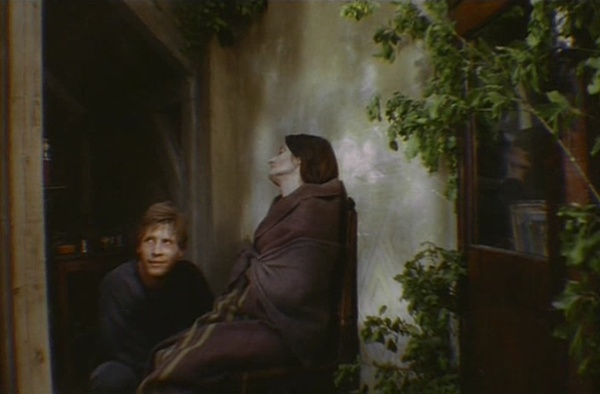
第三,人物很少。亚历山大·索科洛夫的《母与子》,自始至终只有一个将死的母亲和陪着她的儿子,两个人在屋子里、树丛下、草地上来来去去,只碰见远处滑过的火车,没有见过任何别人。


第四,动作迟缓,表情单一。罗伊·安德森是此类代表,以《寒枝雀静》为首的生活三部曲,让你觉得所有瑞典人都是迈不动脚的胖子、脸色苍白的面瘫,都在素洁单调的城市里浪费时间。


第五,空间简单,极少变化、没什么连续性。远古草原、空间站、月球基地、木星轨道,库布里克用这些距离极远的空间点,拼搭起《2001:太空漫游》这部史上极闷作品。


第六,情节匪夷所思、甚至没有可辨识的完整故事。奎氏兄弟的《本杰明学院》,几乎是一部影像版的意识流小说,看上去有许多人,也总在相互发生片段的事件,但想搞明白到底发生了什么,是不大可能的。


第七,镜头少而长,时间流逝缓慢,让人着急。米克洛斯·杨索的《红色赞美诗》整个就像一部操场纪录片,一大群人在缓慢少动的镜头里跑来跑去、喊来喊去、从近到远又从远到近。


台词和音乐(声音)、人物(关系)、动作(表演)、空间(场景)、镜头(画面)——这些都作为电影表达的语言。闷片的共同之处正在于:减少语言。减少或者说简化(形式上的)语言,也是在放大语言本身的细节和能力。

回到一个基本问题上,电影的根本素质是什么呢?是画面的运动,超过照片和绘画的静止状态,运动引入了时间这一维度。运动带来的直接幻觉就是速度,剪辑和快速剪辑,便是在速度上越来越强化运动性,好莱坞早已为此着迷了,观众也是。快速是一种狂欢状态,消停下来,回到现实,往往处于难免的虚无之中。快速是不现实的、虚假的,而现实的速度就是一秒钟接着一秒钟度过时间。


吃一颗土豆,咬下去、咀嚼、吞咽,就是需要几分钟的时间。你和一个人在街头走路,五百米,三分钟,沉默、没有什么话说,生活就是这样的。我在电脑前写这一段文字,一两个小时,几支烟,一口口抽,双腿换了好几个姿势,就是这样的。

闷片的简省,是一种理智的、诗意的恢复,它尊重现实的时间和速度。它考虑的问题是,电影当然是需要运动的,但不一定要多动。把运动降低到基本状态,慢,提供更多的同时性和真实性,复现生活的本来状态。

比如说,音乐其实是一种抒情的强权,它对情绪具有过强的引导性,它"教"你在此时感到紧张、"教"你在彼时感到悲伤,但你能否自己去感受到呢?电影作者自己是否对画面的感染力有足够的信心呢?一个人在泥泞的路上行走,鞋底在泥水中起落发出的吱嗒声,应该足够让你觉得沮丧了,这里不需要一段煽情的音乐,也不需要人物用台词诉说。


比如说,任何一个故事,在每一个人物的视角上,它并不是全景式的,它是片面的、个人的、主观的。很少的人,很少的动作,他更多的沉默、不动、出神,便更多地接近了内心真实的状态,我因此感受到的也是让我更信服的。长镜头,它用几分钟甚至几十分钟,来保持电影和观看的同步,你注视那人物足够久,你才能真实地感觉到他的状态。

我喜欢闷片的原因也在于,我对看电影有一定的要求。我不喜欢被动地被灌输信息,我所接受的务必是我理会并相信的。消遣当然存在,也必须,但当我去观看一部电影,想从中获得感受和信息的时候,我希望它能拥有一些入口,让我进入,不要太满、太严丝合缝,要有很多停顿、留白,这些地方,由我自己去填补,这样,这部电影便和我真正有互通。


如果一部电影,我一次并没有全盘理解,那么多好啊,我拥有了再看一次的动机。我相信,好的电影,和好的艺术一样,让人愿意反复体验。所以,对于在电影中获得一个完整、清晰、有始有终的故事,我并无需要。

在观看闷片的过程中,我也是在运动的,所以,我觉得闷片一点也不闷。
Evernote helps you remember everything and get organized effortlessly. Download Evernote.

The Truth Is in the Detail

  The Truth Is in the Detail On Paul Celan’s writing between languages. By Lucy Ives Originally Published: 八月 17, 2026 Share Photo: Gisèle C...